


THE HISTORY OF TEA
The tea plant is Camellia sinensis (L.) Kuntze, belonging to the family of Theaceae, probably native to northern India and China. In the past mistakenly it was thought that there were more species of this plant; The same botanist Linneo, father of the binary classification of plants, fell into error, considering the existence of two tea plants, one used for the production of green tea and the other for that of black tea. From the 1950s scholars agreed on the existence of a single tea plant species, Camellia sinensis, present in nature in two main varieties: assamy and sinensis.
So the immense typology of tea that exists on the market comes all from the leaves of the same botanical species of plants. These are the different techniques of cultivation and transformation that make the difference.
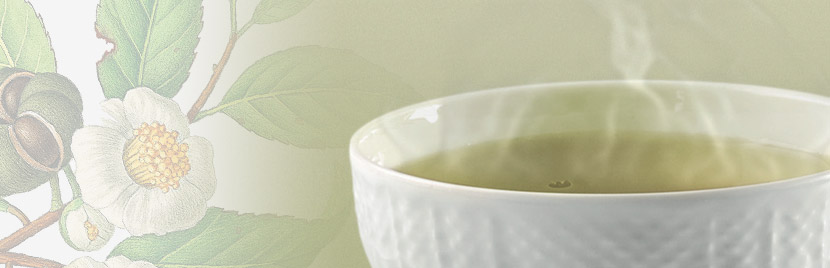
The tea plant is an evergreen shrub that reaches 4-5 m in the sinensis variety and 8-11 m in the assam, although in the plantations, to facilitate harvesting and make the leaves more dense and hold, the height is Held about 1 to 20 cm. It is cultivated in hot and humid regions and grows at or near 2 m per year.
Depending on the country, it is found at sea level at 2500 m high. High altitude hens are generally considered more valuable because leaflets that grow more slowly develop a better taste and aroma. In favorable climate zones, up to 20 crops per year are produced, while in colder ones a maximum of 3 or 4. Crops harvested in different year periods can be very different in flavor and aroma.
After harvesting, the leaves are immediately subjected to a whole series of workings, which will determine the type of tea that will be obtained at the end.
In the case of black teas, the leaves are first dried by ventilating with warm air at about 30 ° C and then compressed with mechanical rollers, which do not break but break their ribs, beginning with To a process of fermentation, during which the substances that will give flavor and aroma to the tea are formed. After 30-60 minutes fermentation is interrupted by drying, made with hot air jets at 85-100 ° C, which gives the leaves the typical dark black color.
To get a green tea Instead, freshly harvested leaves are steam-treated or roasted in metal containers for a very short time to destroy the enzymes contained therein and prevent fermentation processes. This operation allows the leaves to retain unaltered most of the components present in the fresh leaf. The leaves are then rolled with different methods depending on the type of tea and finally dried.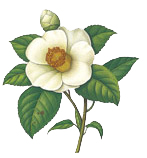
There are also numerous semifinished teas (Oolong or Wulong( products, which are produced with a system similar to that of black tea, but for which the fermentation process is conducted for shorter times. Thus, a wide range of teas is obtained, whose aroma and content in active ingredients will be more similar to that of green tea, if the fermentation was short, or that of the black tea, if the process lasted longer.
Then there are the flavored teas, prepared with black tea, green tea or Oolong tea, to which are added flower petals, pieces of fruit, spices and essential oils. Some of these already existed in ancient China, where tea leaves were added, following rigorous recipes, rose petals, jasmine flowers or essential bergamot oil.
Depending on the country, it is found at sea level at 2500 m high. High altitude hens are generally considered more valuable because leaflets that grow more slowly develop a better taste and aroma. In favorable climate zones, up to 20 crops per year are produced, while in colder ones a maximum of 3 or 4. Crops harvested in different year periods can be very different in flavor and aroma.
After harvesting, the leaves are immediately subjected to a whole series of workings, which will determine the type of tea that will be obtained at the end.
In the case of black teas, the leaves are first dried by ventilating with warm air at about 30 ° C and then compressed with mechanical rollers, which do not break but break their ribs, beginning with To a process of fermentation, during which the substances that will give flavor and aroma to the tea are formed. After 30-60 minutes fermentation is interrupted by drying, made with hot air jets at 85-100 ° C, which gives the leaves the typical dark black color.
To get a green tea Instead, freshly harvested leaves are steam-treated or roasted in metal containers for a very short time to destroy the enzymes contained therein and prevent fermentation processes. This operation allows the leaves to retain unaltered most of the components present in the fresh leaf. The leaves are then rolled with different methods depending on the type of tea and finally dried.
There are also numerous semifinished teas (Oolong or Wulong( products, which are produced with a system similar to that of black tea, but for which the fermentation process is conducted for shorter times. Thus, a wide range of teas is obtained, whose aroma and content in active ingredients will be more similar to that of green tea, if the fermentation was short, or that of the black tea, if the process lasted longer.
Then there are the flavored teas, prepared with black tea, green tea or Oolong tea, to which are added flower petals, pieces of fruit, spices and essential oils. Some of these already existed in ancient China, where tea leaves were added, following rigorous recipes, rose petals, jasmine flowers or essential bergamot oil.
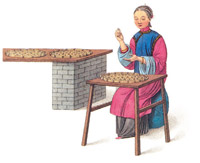 Heat in a container the amount of water, preferably low calcareous or oligomineral, necessary for the cups you want to prepare: 1 cup of tea contains about 150 ml of water. Use a teaspoon of teas per cup, thicker if the leaves are large, more satin if they are crushed.
 • For blacks, the water is brought to a boil and then the flame is extinguished immediately: the water temperature for the infusion should be about 95-100 ° C.
• To prepare green or white tea, however, water does not have to boil because they generally require an infusion temperature of around 70-80 ° C. Cover the container where you prepare to avoid dispersing the most volatile aromatic substances.
• If you are preparing a white tea leave the container uncovered to make the gems, particularly delicate, not cured.